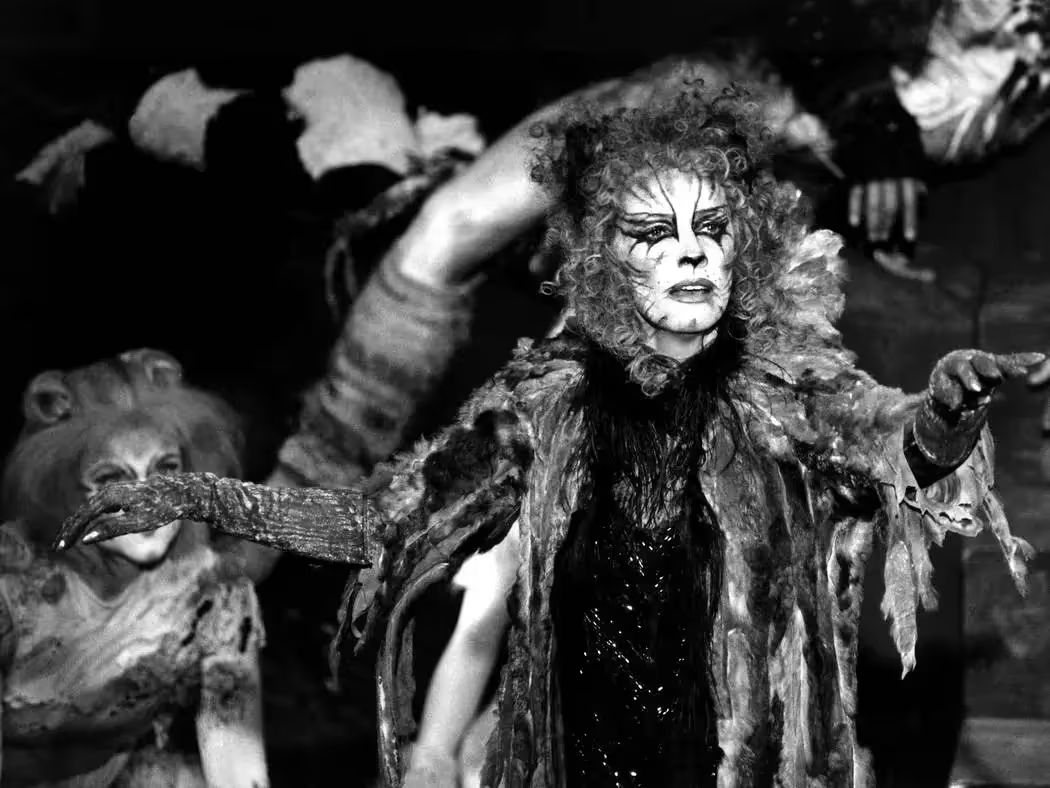
The Phantom On Social Media
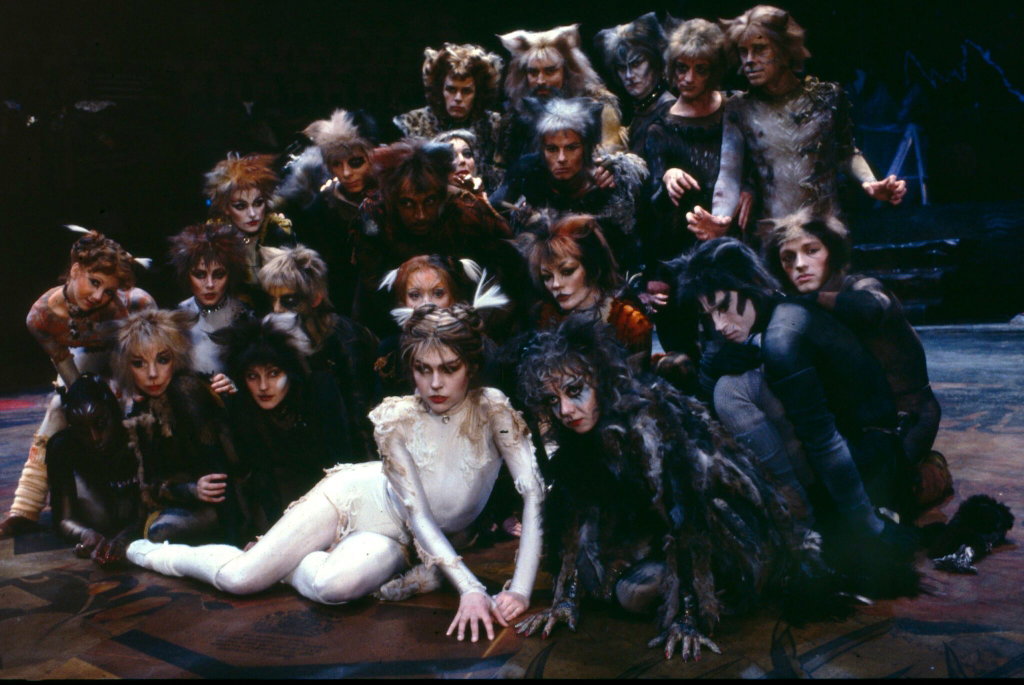
Every great production starts somewhere unexpected. CATS began not on a stage, but in a child's bedroom - where a young Andrew Lloyd Webber listened, night after night, to his mother reading him T.S. Eliot's whimsical poems about a secret world of cats. He was six years old, and he never quite let those poems go.
Eliot himself had written them decades earlier, in the 1930s, as playful letters to his godchildren - verses so charming they were eventually gathered into Old Possum's Book of Practical Cats in 1939. It was pure nonsense verse, never intended for the stage. But Andrew Lloyd Webber had other ideas.
By 1978, fresh off years of writing music first and handing words to a lyricist, he set himself a new challenge: could he compose melodies to words that already existed? Eliot's poems became his testing ground. What started as an experiment quickly became an obsession - first a handful of songs performed at his personally-curated Sydmonton Festival, then a fuller concert piece in the mode of Peter and the Wolf, then something else entirely: a shape, a rhythm, a world.
The turning point came in 1980, when Eliot's widow, Valerie, handed Andrew an unpublished poem her husband had once thought too melancholy for children - the story of a faded, glamorous cat named Grizabella. It gave the show something it hadn't had before: heart. Around the same time, a cryptic letter from Eliot describing cats ascending "up, up, up to the Heaviside Layer" hinted at a mysterious event the poems only ever called the Jellicle Ball. Suddenly, Andrew wasn't just setting poems to music - he was building a self-contained mythology.
He assembled a company of visionaries to help him do it: producer Cameron Mackintosh, choreographer Gillian Lynne, director Trevor Nunn, designer John Napier, and lyricist Richard Stilgoe, brought in to help crack the show's opening number. Rehearsals began in early 1981 - not without drama, including Judi Dench's shock exit after injuring her Achilles tendon, which opened the door for Elaine Paige to step into the role that would come to define her career.
On 11 May 1981, Cats opened at the New London Theatre. Even a bomb scare just before the curtain call - cast still fully costumed, audience spilling onto the street - couldn't stop what was coming. Within months, the show swept Britain's top theatre honours, including Best New Musical at the Olivier Awards. And on 1 July 1981, the Original London Cast Recording hit the shelves, capturing forever the sound of a show that had begun, half a century earlier, as bedtime stories for a little boy who never stopped listening.
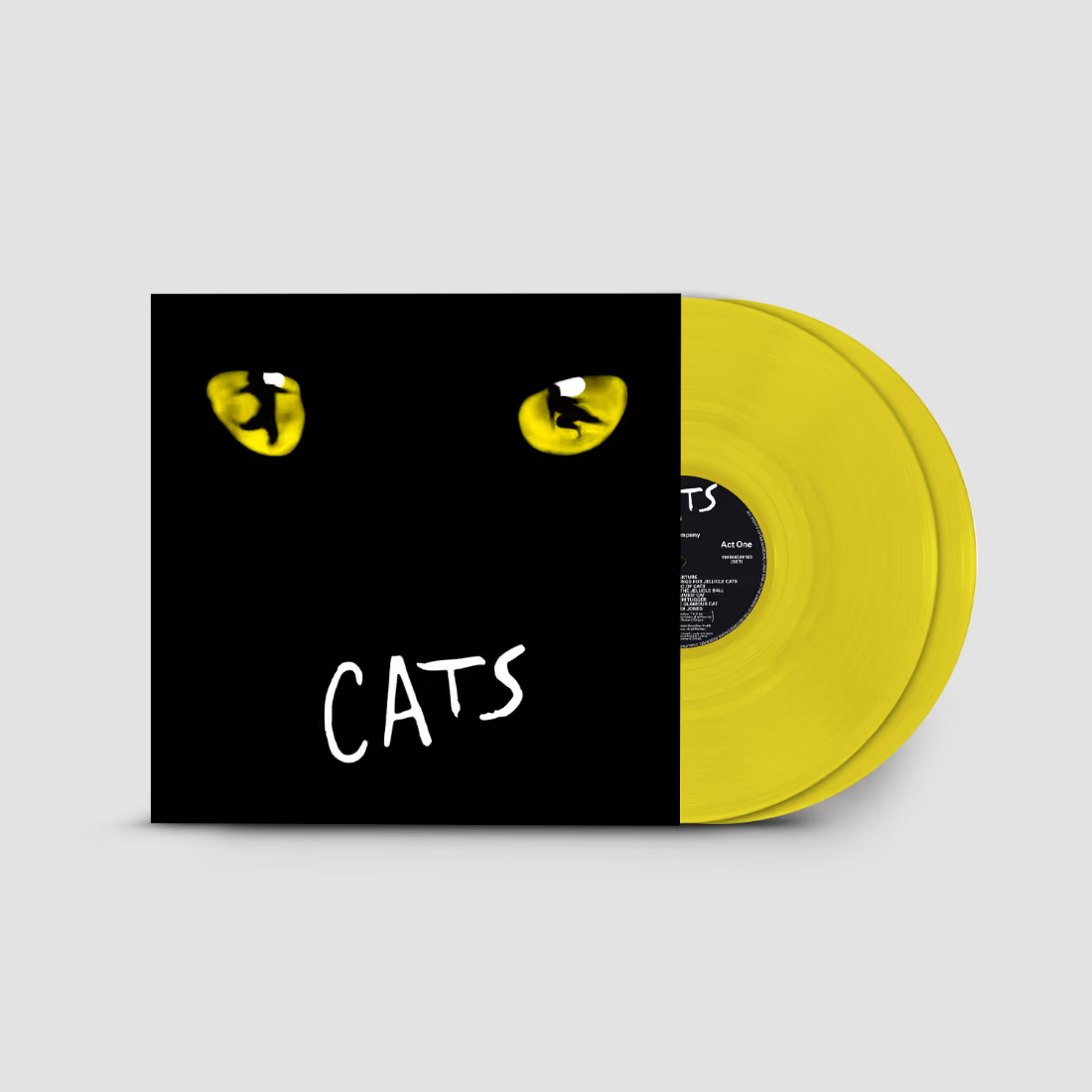
Some cast recordings simply document a show. This one preserved a phenomenon in the making.
Just seven weeks after CATS opened at the New London Theatre, the Original London Cast Recording was released on 1 July 1981 - rushing to bottle the energy of a production that was already becoming the talk of the West End. It shot to No. 6 on the UK album charts that August, while Elaine Paige's rendition of "Memory," released as a standalone single, climbed to the same position on the UK Singles Chart. By 1982, it had crossed the Atlantic and a Grammy nomination for Best Cast Show Album soon followed.
Behind the recording sat many of the same visionaries who built the show itself: conductor Harry Rabinowitz and music director David Firman guided the orchestra through David Cullen's lush orchestrations, while Trevor Nunn and Richard Stilgoe's additional lyrics wove seamlessly into Eliot's original verse.
It's a recording built on discovery as much as performance. Elaine Paige, thrust into the role of Grizabella after Judi Dench's injury sidelined her mere weeks before opening, delivers a "Memory" that would go on to define both her career and the song itself. Paul Nicholas lends his voice to "The Rum Tum Tugger," while Brian Blessed anchors the album's stately numbers, "Old Deuteronomy" and "The Ad-dressing of Cats," with unmistakable gravitas.
Across two discs, the recording bottled everything that made CATS impossible to ignore: Gillian Lynne's rhythms audible even without the choreography, the theatrical sweep of Nunn's staging translated into sound, and a cast giving performances so vivid they needed no visual accompaniment at all. It remains, more than four decades on, the definitive document of where the Jellicle legend began - heard, rather than seen.
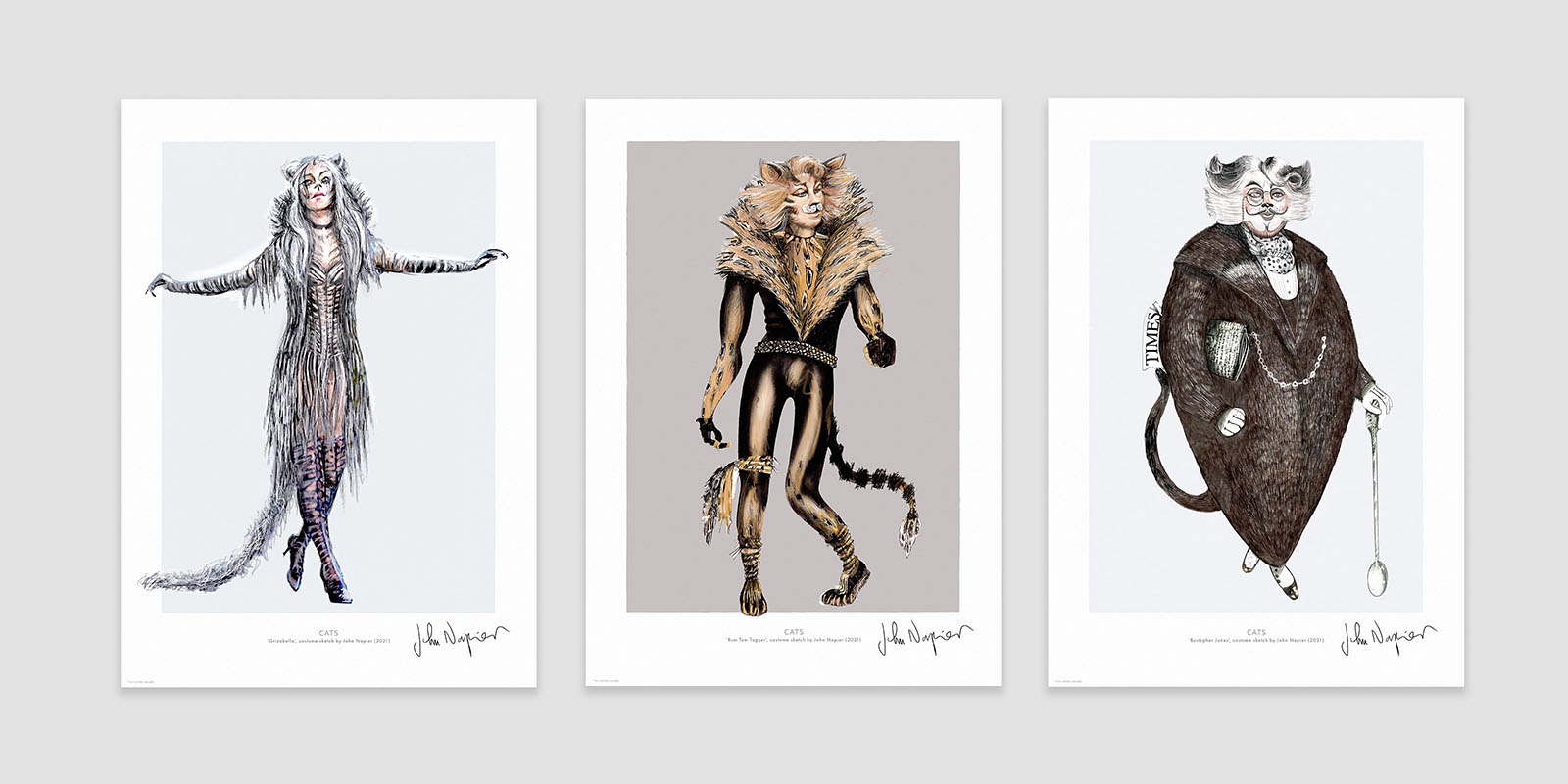
Every legendary production needs a defining image, and for CATS, that image was born from a single, deceptively simple problem: how do you make actors look like cats without making them disappear inside a costume?
The answer came from John Napier - set and costume designer, and by his own admission, not a conventional one. “I'm more of a concept and barbed-wire designer,” he once said. “I don't do flowers and I don't do really good curtains.” Trained as a sculptor before he ever set foot in a theatre, Napier approached CATS the way he approached everything: as a problem of space and form, not decoration.
He rejected the obvious choice immediately. Rooftops - the cliché setting for stage cats - would have made the show's ambitious choreography impossible. Instead, Napier built a towering junkyard, an oversized, fantastical world of scavenged debris that became as much a character as the cats prowling across it.
But the costumes, he later admitted, were the hardest part of all. “The intention was never to lose the human being in the cat guises,” he explained. Rather than pursuing literal, realistic fur and whiskers, he blended feline and human elements - leg warmers instead of paws, wild manes of hair instead of fur, painted faces that hinted at markings rather than mimicking them. “If you get it right,” Napier said, “the audience fills in the gaps.”
The results were unlike anything West End audiences had seen. Each principal cat received its own distinct silhouette and palette, built from Napier's conceptual “Sketches of Cats” - designs that read as much like individual character studies as costume plots. Grizabella, modelled in Napier's mind on “Judy Garland at the end of her life,” wore tattered, faded fabrics that told her story before she sang a note. Mr. Mistoffelees, by contrast, moved through the show in sleek understated black - a costume built for transformation, quietly awaiting the moment its wearer became “magical.”
The design work paid off almost immediately. Napier was named Olivier Award Designer of the Year in 1981 for Cats, and the following year picked up the Drama Desk Award for Outstanding Costume Design when the show crossed the Atlantic. It marked the beginning of a defining creative partnership between Napier and Andrew Lloyd Webber, one that would go on to shape the visual language of Starlight Express, Les Misérables, and Sunset Boulevard.
“Old Possum” wasn’t a persona T.S. Eliot built for the public - it was a private joke, a name given to him by his friend and fellow poet Ezra Pound, and one Eliot wore happily in his letters home. It was under this name, not his own, that the poems first appeared: not as literature, but as correspondence. Somewhere around 1931, his godson Tom Faber wrote to him about a cat. Eliot wrote back in verse. It became a habit. Over the course of the 1930s, letters to Tom and to his goddaughter Alison Tandy filled up with feline character studies - a Gumbie Cat here, a Bravo Cat there - each one a small performance staged for an audience of one child.
There’s a telling detail long before any of it was written down: an embroidery Eliot made in 1894, aged six, of a cat with a ribbon collar, poised to pounce on a ball of wool. Whatever it was about cats that would occupy him for the rest of his life, it started decades before Old Possum had a name at all.
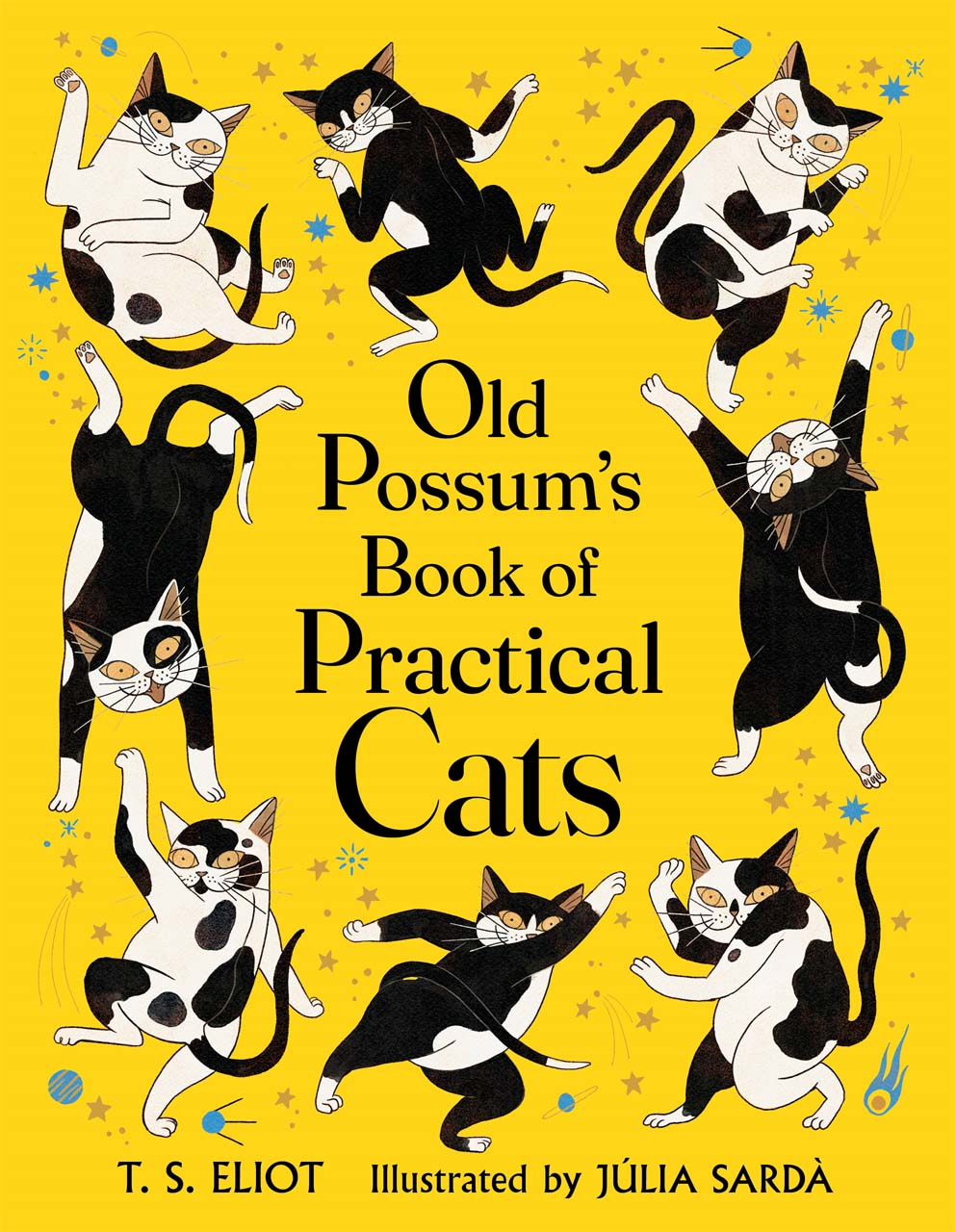
By 1939, enough of these letter-poems existed that Faber and Faber - the publishing house where Eliot worked as an editor by day - persuaded him to collect them into a book. Eliot wasn’t entirely at ease with the idea. Writing to Geoffrey Faber that July, he confessed he wanted the poems to succeed on their own merits - not simply wave through on the strength of his name. He needn’t have worried. Old Possum’s Book of Practical Cats was published on 5 October 1939, with a cover Eliot illustrated himself, and it has never been out of print since.
What makes a cat “practical,” exactly? Eliot had his own theory, sketched out in a letter a few years earlier: most cats, he reasoned, simply are practical - pragmatic, self-possessed, entirely unsentimental about what they want. It’s less a category than an observation, and it’s the thread that runs through every poem in the book - from Jennyanydots, the sleepy-eyed Gumbie Cat living a double life after dark, to Growltiger, the seafaring Bravo Cat with a weakness for romance and a fatal one for the Siamese. Then there’s Macavity, the Napoleon of Crime, always one step removed from the scene; and Mungojerrie and Rumpelteazer, the pair of domestic troublemakers whose chaos still gets blamed on the household cat next door.
The first edition had no interior illustrations at all - just Eliot’s own cover drawing. It was the 1940 reissue, illustrated by satirical cartoonist Nicolas Bentley, that gave the poems the faces most readers picture today, and even that nearly went differently: the Faber Book Committee’s one note on Bentley’s early sketches was that the cat looked too anxious - more worry than contemplation. Later editions would bring in Edward Gorey in 1982 and Axel Scheffler in 2009, each generation redrawing Old Possum’s cats in their own hand.
For a book of light verse - written, by its author’s own account, as a private amusement for two children - its afterlife has been anything but small. Composers set it to music in the 1950s. Faber has kept it in print continuously since 1939. And in 1981, more than forty years after those first letters to Tom Faber, Andrew Lloyd Webber found in it something no one else quite had: not just characters, but a world. A stage full of practical cats, waiting to be Jellicle.
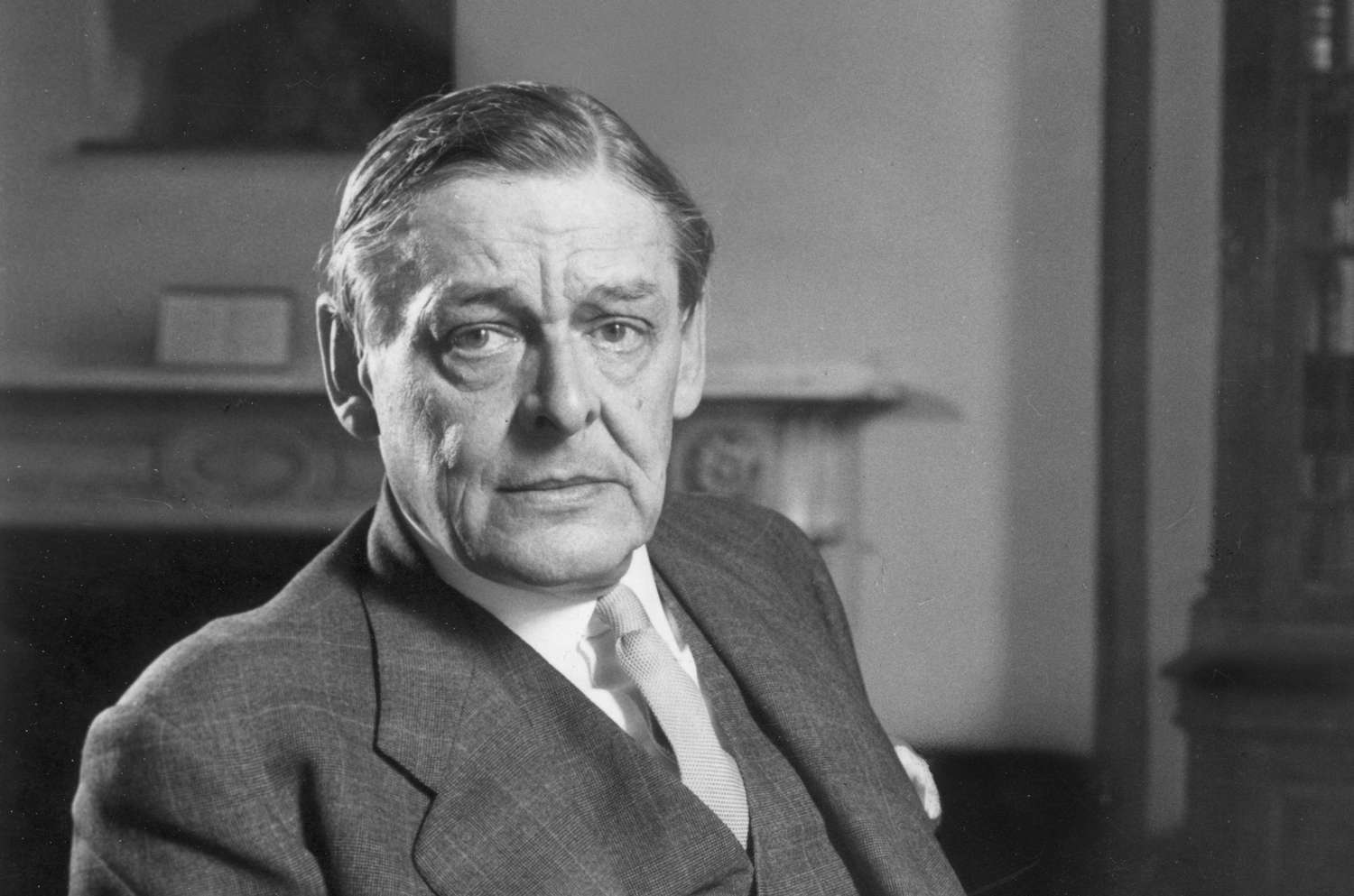
Long before there was a stage, there was a nickname. T.S. Eliot - the famously private poet behind The Waste Land, a man who forbade any biography of himself - had been dubbed "Old Possum" by his friend and fellow poet Ezra Pound, a joke about his tendency to play dead rather than reveal himself. It's a strange alias for the author of some of the century's most austere verse to adopt for a book about cats, but then, Eliot's cats were never quite what they seemed either.
The earliest trace of them dates to 1931, in a letter to his young godson Tom Faber, who had written proudly to his godfather about a cat of his own. Eliot's reply was gently competitive: his cat, he wrote, was far more remarkable - a "Lilliecat" by the name of Jellylorum. More letters followed, to Tom and to the children of his friends the Tandys, each one introducing a new character: Pollicle dogs, Jellicle cats, a Gumbie Cat who kept an orderly house. By 1936, Faber and Faber had even announced a forthcoming title - Mr Eliot's Book of Pollicle Dogs and Jellicle Cats as Recited to Him by the Man in White Spats - though the book that eventually appeared, three years later, would carry a rather more practical name.
Old Possum's Book of Practical Cats was published on 5 October 1939, gathering poems Eliot had spent the better part of a decade sending, one at a time, to children who never knew they were witnessing the birth of a literary institution. It was nonsense verse in the tradition of Edward Lear: playful, rhythmic, entirely unburdened by the weight critics usually assigned Eliot's work. It became, almost accidentally, his best-selling book. Which is precisely how it landed in the hands of a six-year-old Andrew Lloyd Webber, listening from his bed as his mother read him poems about cats with names like Growltiger and Mungojerrie: never intended as anything more than gifts to a handful of lucky godchildren, and yet somehow built, all along, for a much bigger stage.
Andrew first spoke to Cameron Mackintosh about a stage musical who was also passionate about musicals but, at that point, had not produced any big hits. Cameron suggested Gillian Lynne as a choreographer and initial discussions with her led them to director Trevor Nunn who, in turn, introduced them to them to the designer, John Napier.
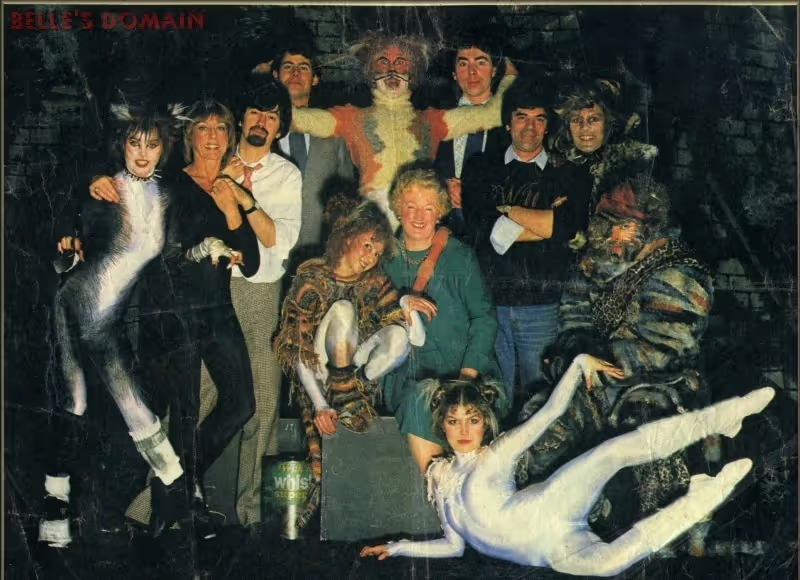
A recording of 'Magical Mr. Mistoffelees' by Paul Nicholas was first released as a promotional single by Polydor in the autumn of 1980. The single was later included in the original London cast recording, for which Paul Nicholas originating the role of Rum Tum Tugger.
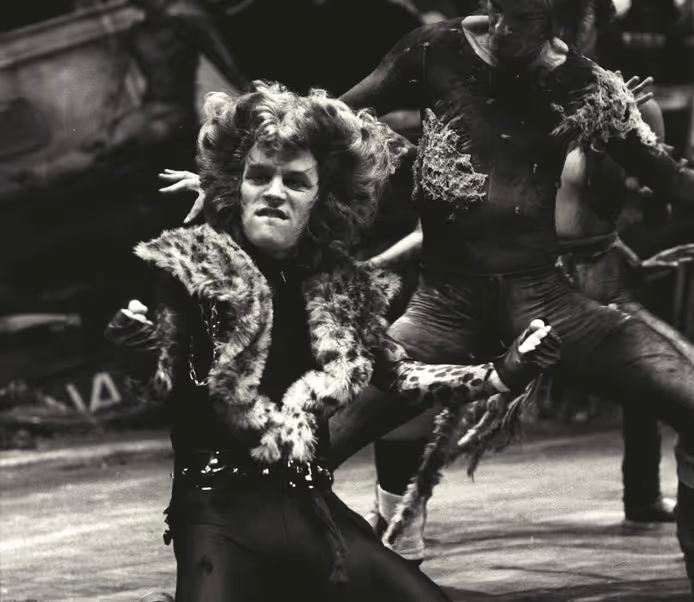

Judi Dench was first offered the roles of Grizabella and Jennyanydots, and Wayne Sleep was offered the role of Mr. Mistoffelees. Rehearsals began at the beginning of 1981, during which Judi Dench very sadly snapped her achilles tendon. Elaine Page went on to originate the iconic role of Grizabella in 1981.
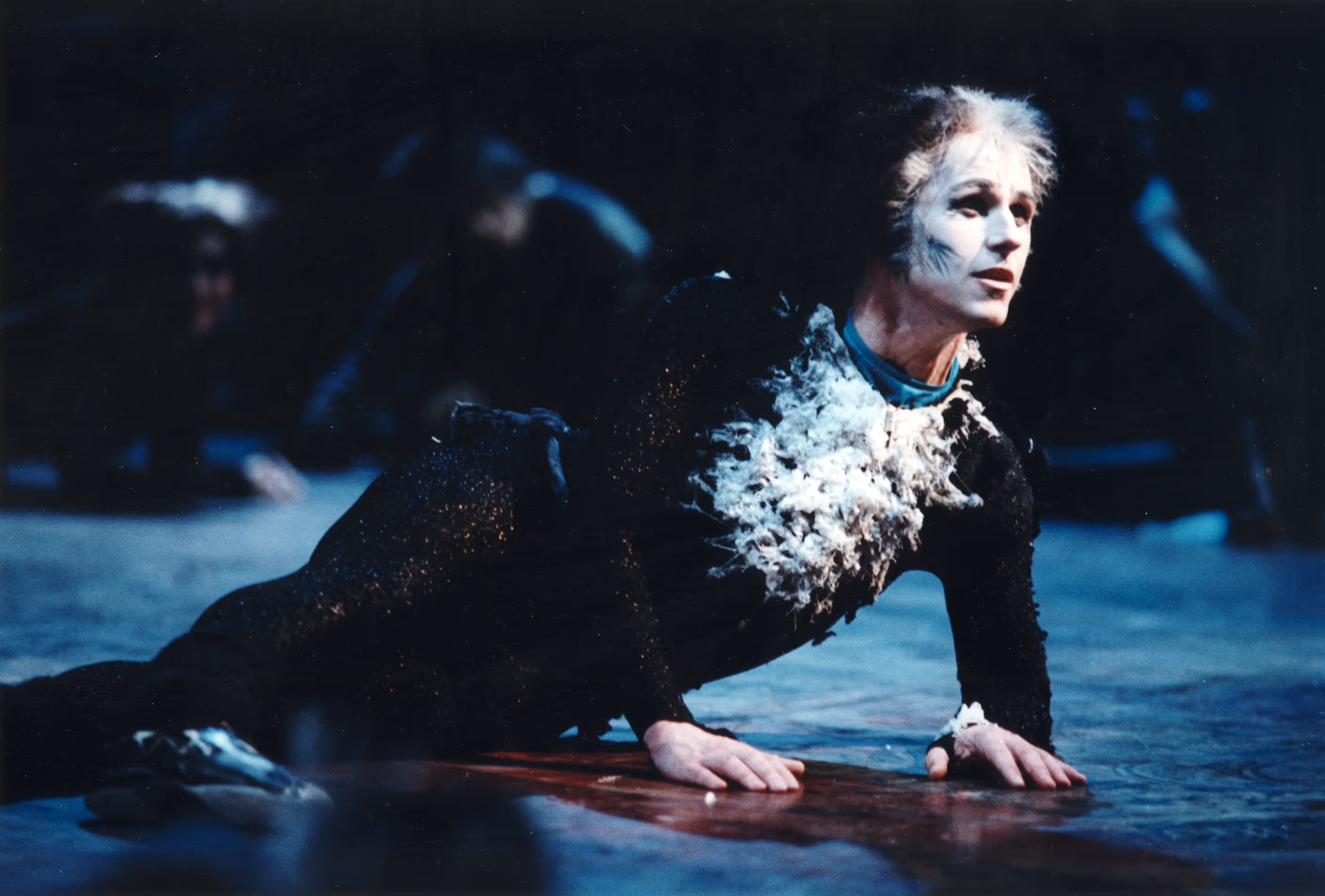
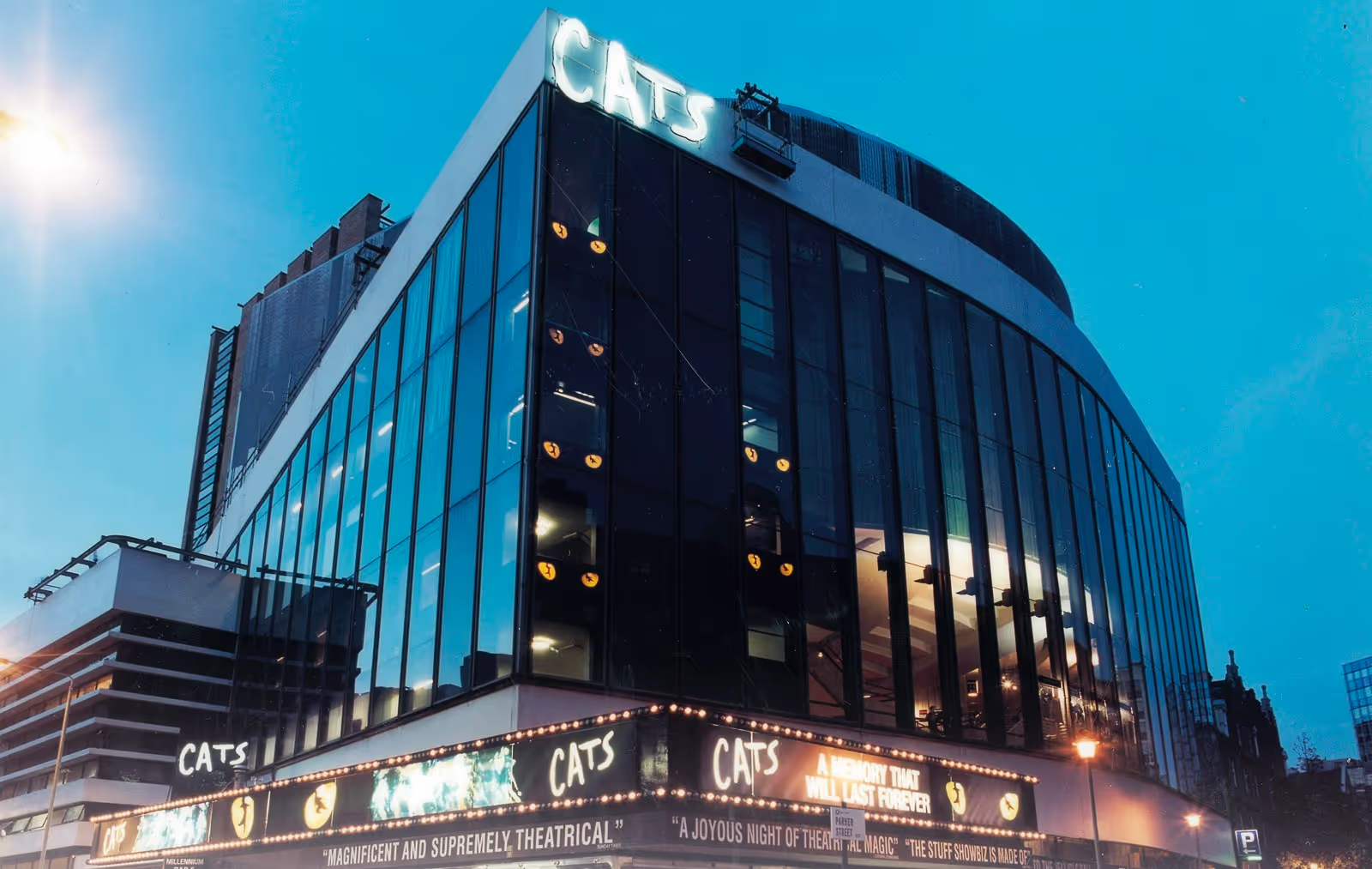
The world premiere and original London production of CATS opened at the New London Theatre on 11 May 1981. During the performance just before the curtain call, there was a bomb scare that turned the audience and fully cat-costumed cast out onto the London streets until the all clear was given.
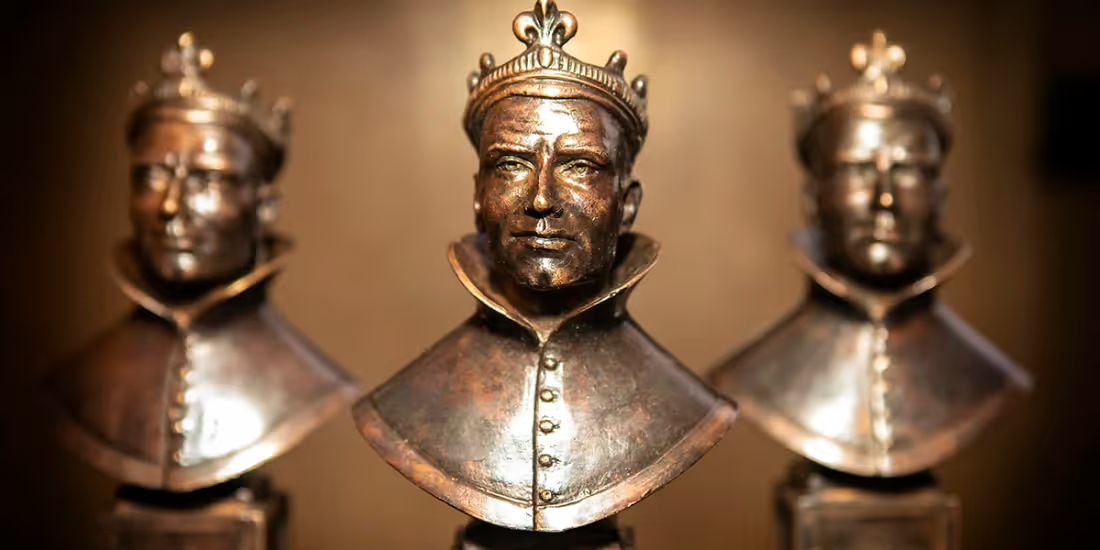
The original production of CATS received a number of nominations and won 5 awards, including 'Best Musical' at the 1981 Evening Standard Theatre Awards, 'Best New Musical' and Gillian Lynne for 'Outstanding Achievement in a Musical' at the 1981 Laurence Olivier Awards, 'Best British Musical' and "Memory" for 'Best Song Musically and Lyrically' at the 1982 Ivor Novello Awards.
On 1 July 1981, the Original London Cast Album of CATS was released by Polydor Records. Featuring Elaine Paige's iconic turn as Grizabella, it reached its peak position of no. 6 in August of the same year and spent 11 weeks in the UK Album charts.
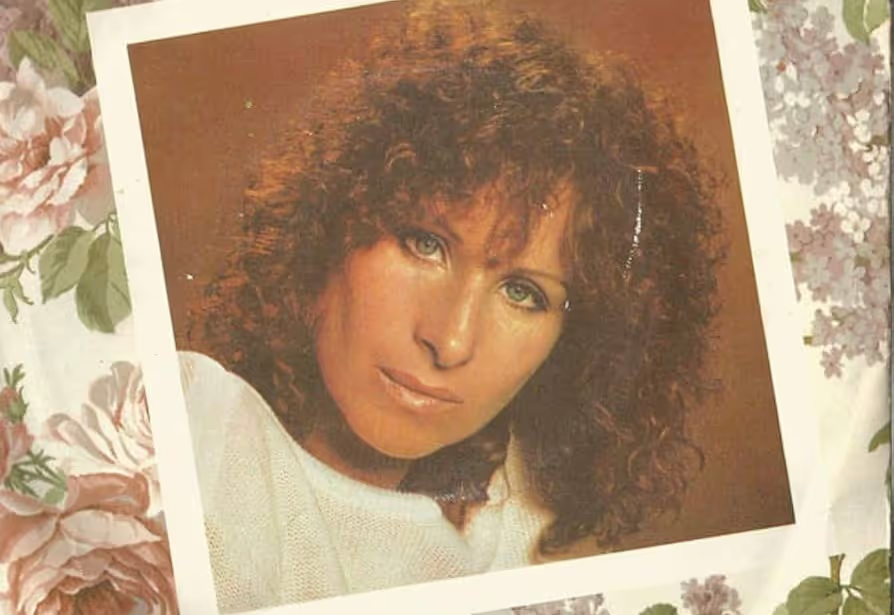
American singer, songwriter, actress and director Barbra Streisand recorded 'Memory' for her album 'Memories' on 15 September 1981. The album was released on November 1981 but the single wasn't released until February 1982. 'Memories' was the top selling album of that year in the UK.
On 7 October 1982, the original Broadway production of CATS opened at the Winter Garden theatre, and starred Betty Buckley as Grizabella.